Understanding Your Rights as a Business Owner
Comprenda Sus Derechos como Propietario de Negocio
As a business owner, you already navigate health codes, fire inspections, and liquor licensing. Understanding how the Fourth Amendment applies to your property is no different — it's a fundamental part of operating a well-run business.
Como propietario de negocio, usted ya navega códigos de salud, inspecciones de incendios y licencias de alcohol. Entender cómo la Cuarta Enmienda se aplica a su propiedad no es diferente — es una parte fundamental de operar un negocio bien administrado.
The Fourth Amendment protects your business from unreasonable searches and seizures. In practice, this means that law enforcement — including federal immigration agents — cannot simply walk into your non-public areas without legal authorization. You have the right to ask what authorization they are operating under, and your response should depend on what they show you.
La Cuarta Enmienda protege a su negocio de registros e incautaciones irrazonables. En la práctica, esto significa que las fuerzas del orden — incluidos los agentes federales de inmigración — no pueden simplemente entrar a sus áreas no públicas sin autorización legal. Usted tiene derecho a preguntar bajo qué autorización están operando, y su respuesta debe depender de lo que le muestren.
The Warrant Distinction: The Most Important Thing on This PageLa Distinción de la Orden: Lo Más Importante en Esta Página
Not all warrants are the same. The difference between the two types below determines your legal obligations — and your rights.
No todas las órdenes son iguales. La diferencia entre los dos tipos a continuación determina sus obligaciones legales — y sus derechos.
Administrative WarrantOrden Administrativa (ICE Form I-200 or I-205)Orden Administrativa (Formulario ICE I-200 o I-205)
This is an internal immigration document — it is not signed by a judge. It authorizes the arrest of a specific named individual only. It does not authorize agents to enter non-public areas of your business, such as kitchens, storage rooms, offices, or employee-only spaces.
Este es un documento interno de inmigración — no está firmado por un juez. Autoriza el arresto de un individuo específico con nombre solamente. No autoriza a los agentes a ingresar a las áreas no públicas de su negocio, como cocinas, almacenes, oficinas o espacios exclusivos para empleados.
Your right: You can lawfully decline to allow agents past your public-facing areas. You are not obstructing anything — you are exercising your constitutional rights as a property owner.
Su derecho: Puede legalmente negarse a permitir que los agentes pasen de sus áreas públicas. No está obstaculizando nada — está ejerciendo sus derechos constitucionales como propietario de una propiedad.
Judicial WarrantOrden Judicial (Signed by a Federal Judge)Orden Judicial (Firmada por un Juez Federal)
This is a court order signed by a judge, typically from a U.S. District Court. It may authorize a search of specific areas or the arrest of a specific individual on your property.
Esta es una orden del tribunal firmada por un juez, generalmente de un Tribunal Federal de Distrito. Puede autorizar el registro de áreas específicas o el arresto de un individuo específico en su propiedad.
Your obligation: You must comply with a valid judicial warrant — but only within the scope it specifies. If it names a specific room, agents are limited to that room. Read it carefully.
Su obligación: Debe cumplir con una orden judicial válida — pero solo dentro del alcance que especifica. Si nombra una sala específica, los agentes están limitados a esa sala. Léala con cuidado.
The Golden RuleLa Regla de Oro
Three principles every business owner should follow when any law enforcement agency arrives at your door:
Tres principios que todo propietario de negocio debe seguir cuando cualquier agencia de la ley llega a su puerta:
- Never consent to searches. Consent waives your rights. If agents have proper authorization, they don't need your consent.
- Always ask to see the warrant. You are entitled to review it before allowing access beyond public areas.
- Always verify whether it's signed by a judge. This single detail determines what you are legally required to do.
- Nunca consienta los registros. El consentimiento renuncia a sus derechos. Si los agentes tienen autorización adecuada, no necesitan su consentimiento.
- Siempre solicite ver la orden. Tiene derecho a revisarla antes de permitir el acceso más allá de las áreas públicas.
- Siempre verifique si está firmada por un juez. Este único detalle determina lo que está legalmente obligado a hacer.
Think of it this way: you wouldn't let a health inspector into your kitchen without seeing their credentials and understanding the scope of their visit. The same professional standard applies here.
Piénselo así: no dejaría que un inspector de salud entrara a su cocina sin ver sus credenciales y entender el alcance de su visita. El mismo estándar profesional se aplica aquí.
Types of Warrants: Know the Difference
Tipos de Órdenes: Conozca la Diferencia
Federal and ICE warrants can look nearly identical at first glance — but they are legally very different documents with very different implications for your business. Study the differences carefully before law enforcement ever arrives at your door, so you can make an informed decision quickly and confidently under pressure.
Las órdenes federales y de ICE pueden lucir casi idénticas a primera vista — pero son documentos legalmente muy diferentes con implicaciones muy distintas para su negocio. Estudie las diferencias cuidadosamente antes de que las fuerzas del orden lleguen a su puerta, para que pueda tomar una decisión informada rápida y con confianza bajo presión.
Administrative Warrant
Orden Administrativa
ICE Form I-200 (Warrant for Arrest of Alien) or I-205 (Warrant of Removal/Deportation). Not signed by a judge. Does not authorize entry into private areas of your business.
Formulario ICE I-200 (Orden de Arresto de Extranjero) o I-205 (Orden de Deportación). No firmada por un juez. No autoriza la entrada a áreas privadas de su negocio.
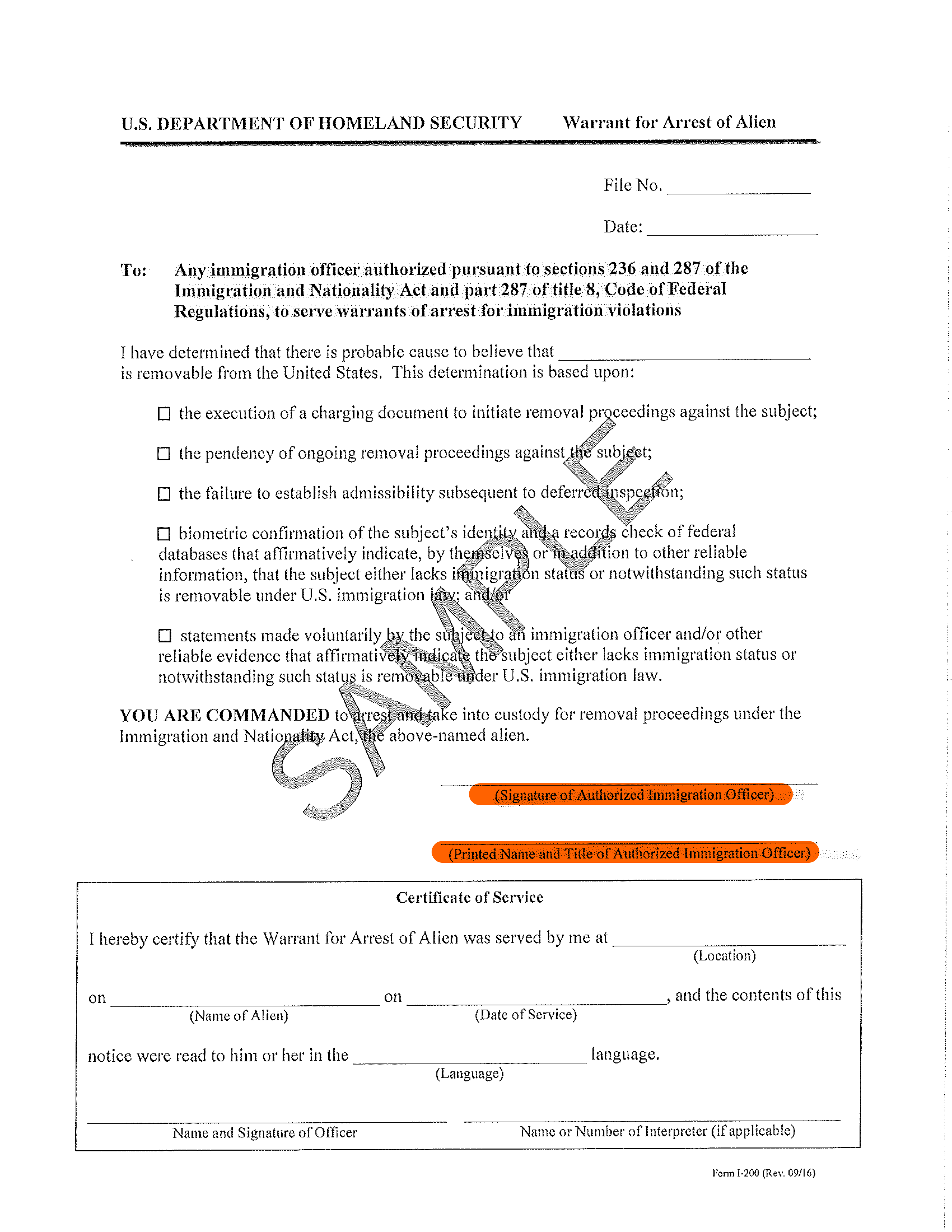
ICE Administrative Warrant — No judicial signature required
Orden Administrativa de ICE — No se requiere firma judicial
Judicial Warrant
Orden Judicial
Issued by a U.S. District Court and signed by a federal judge. Authorizes entry into the specific areas and for the specific purposes named in the document. You must comply — within its stated scope.
Emitida por un Tribunal Federal de Distrito y firmada por un juez federal. Autoriza la entrada a las áreas específicas y para los propósitos específicos nombrados en el documento. Debe cumplir — dentro del alcance declarado.
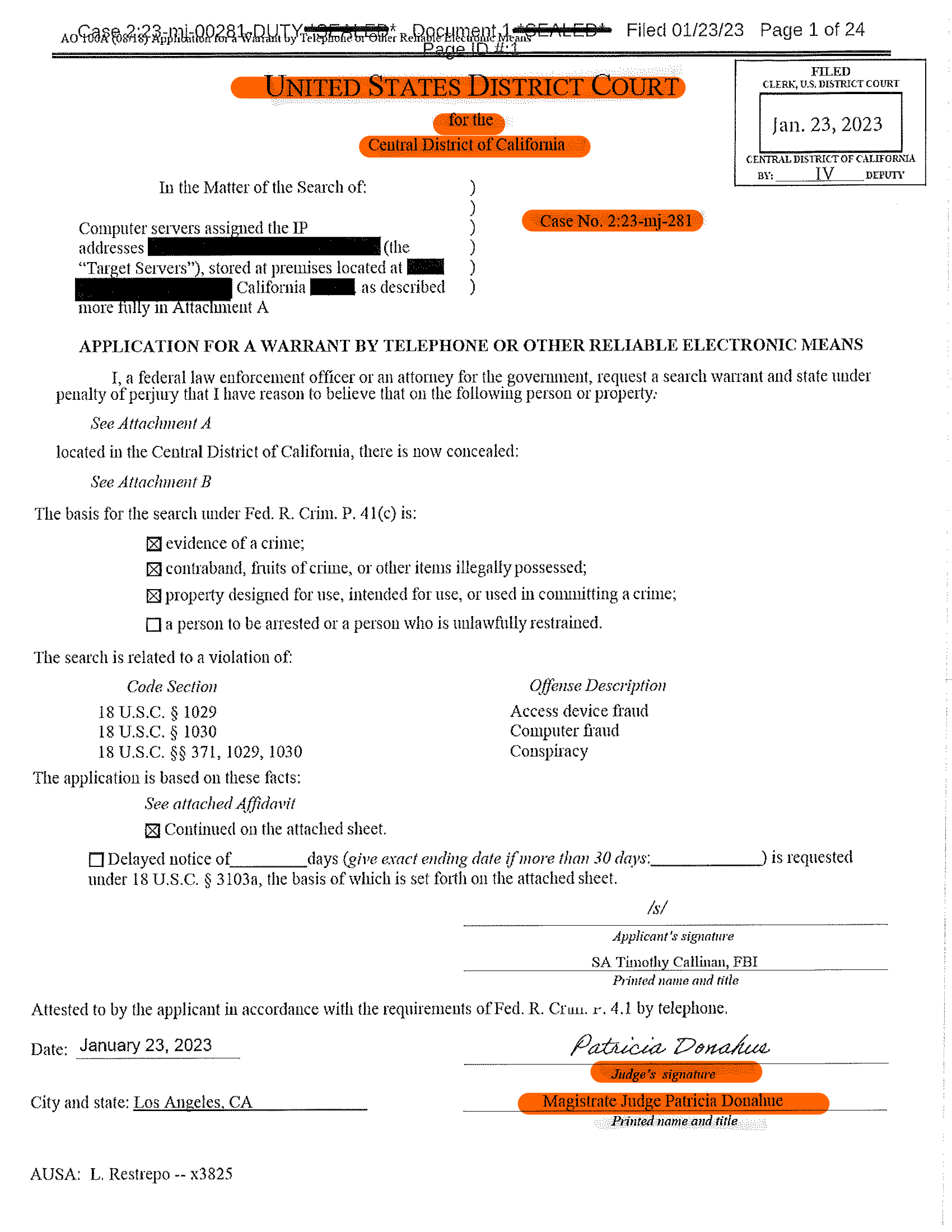
Judicial Warrant — Must bear a judge's signature
Orden Judicial — Debe llevar la firma de un juez
⚠️ Key check: Look for a judge's signature and court seal. If the document does not clearly show a federal judge's signature, treat it as an administrative warrant and exercise your right to limit access to public areas only.⚠️ Verificación clave: Busque la firma de un juez y el sello del tribunal. Si el documento no muestra claramente la firma de un juez federal, trátelo como una orden administrativa y ejerza su derecho a limitar el acceso solo a las áreas públicas.